Beat Live: Show Music Game
- 4.3
- Rating
- 5.00M
- Installs
- Free
- Price

 Analysis by App-foxy
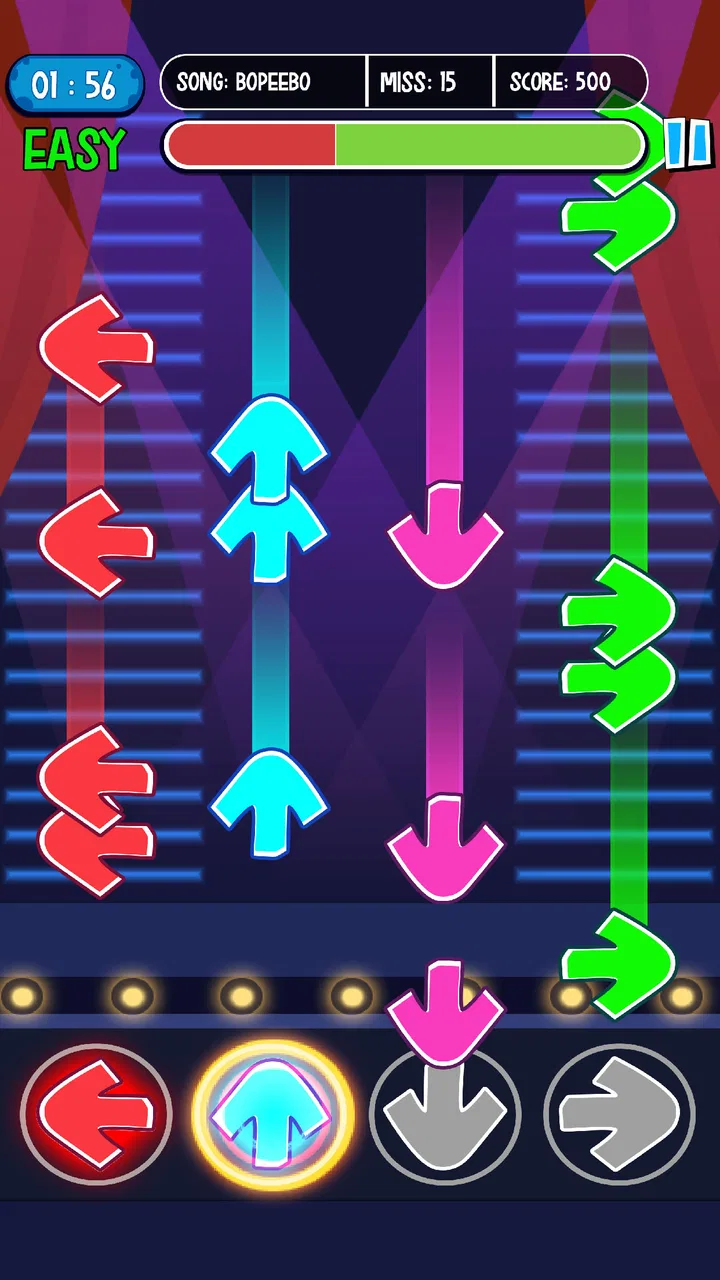
Beat Live: Show Music Game is the kind of rhythm game I can understand immediately: music starts, the stage comes alive, and my job is to keep up with the beat. Developed by Onegame Global Studio, it is a free music game for Android that aims for quick entertainment rather than a complicated simulation. After spending time with it, I found its strongest quality is how quickly it gets me playing. There is no long learning curve before the central idea makes sense.
The first few sessions are especially easy to enjoy. I can pick it up for a short break, focus on the incoming rhythm, and put it down without feeling that I have abandoned a large story or a demanding multiplayer commitment. That makes it a natural fit for commuting, waiting rooms, or those moments when I want something more active than listening to a playlist but less involved than a full adventure game.
Still, the important question is not whether it can entertain me for an evening. Many music games manage that. The more useful question is whether Beat Live can remain part of a regular gaming routine after the initial novelty fades. My answer is qualified: it has a pleasant pick-up-and-play foundation, but its long-term appeal depends heavily on how much variety and challenge I personally want from a rhythm title.
You May Also Like

 Blood Strike: 2.5 Anniversary
Blood Strike’s Loadouts Turn Every Drop Into a Tactical Gamble
A close look at Blood Strike’s custom loadouts: how fast access to signature weapons reshapes its battle royale rhythm, rewards preparation, and narrows the gap between fights.

 Pandora - Music & Podcasts
Pandora’s Music Is Easy to Start, but Harder to Recover
Pandora’s strength is its low-effort path from a seed to a station. Its weak spot is how much confidence it asks you to place in connection, setup, and quiet recovery.

 8 Ball Pool
 Is Built on Rivalries, Rematches, and Routine
A close look at the rivalries, rematches, shared routines, and unanswered safety questions that turn a quick pool match into a persistent mobile community.

 Samsung Music
’s Quiet Strength Is Playing What You Already Own
Its reach comes less from spectacle than from dependable access to a personal library. That simplicity is both the app’s strongest retention engine and its ceiling.

 AccuWeather: Weather Radar
AccuWeather Review: A Quick, Clear Forecast for Everyday Decisions
For everyday plans, the best forecast is the one you can understand quickly. AccuWeather makes rain timing, radar, and local conditions easy to act on, with a few trade-offs.

 Hill Climb Racing
Why Hill Climb Racing Still Turns Crashes Into One More Run
A tiny car, a bumpy hill and one more upgrade: Hill Climb Racing keeps resurfacing because its simple chaos makes every near-miss feel personal.
More From Our News Desk



How the first sessions feel
The game’s presentation is built around the idea of performing on stage. That framing gives each short session a little more energy than a bare sequence of taps would have. I am not simply clearing abstract notes; I am trying to keep a live music performance under control. Even when the underlying action is straightforward, the stage-show theme helps the experience feel more purposeful.
I especially like the low barrier to entry. Someone who has never played a rhythm game can understand the basic goal without reading a long explanation. The game is also suitable for Everyone, which makes it easier to recommend as a casual choice for a broad household audience. That does not mean every player will have the same reaction to it, but the concept is approachable rather than intimidating.
The free entry point matters here. I can try the game without making a purchase first, which is exactly what I want from a short-session music title. In-app purchases are listed at $1.99 per item, so anyone who becomes interested in optional spending should keep that cost in mind. I would personally play the free experience for a while before deciding whether anything extra genuinely improves my routine.
Why it works as a quick break
My most natural use case is a ten-minute pause between other tasks. I can open the game, play a few rounds, and leave without needing to remember a complicated quest, manage a large collection, or wait for a long narrative scene. That simplicity is a strength when my attention is limited.
It also works well when I want to wake myself up a little. A rhythm game asks for timing and concentration, so it feels more engaging than passively scrolling through videos. I would not call it a substitute for a serious music practice tool, but it can turn an otherwise dull break into a small coordination exercise.
There is a useful distinction between playing for relaxation and playing for mastery. At the beginning, I can enjoy the music and stage atmosphere without worrying too much about perfect performance. Once I start chasing cleaner results, the same simple structure becomes more demanding. That shift gives the game at least two audiences: casual players who want instant amusement and rhythm fans who enjoy repeating a section until their timing improves.
What new players should do first
I recommend starting with short sessions rather than trying to force a long play period. Rhythm games can feel easy when I am fresh and surprisingly tiring when I am concentrating continuously. Playing a few rounds, noticing where my timing slips, and taking a break is more useful than tapping through a large number of attempts without focus.
Another practical tip is to play in a quiet setting during the first session. Ambient noise can make it harder to judge the beat, especially when I am still learning how the game communicates timing. Once the controls feel familiar, I can return to it in noisier places, but the initial learning period is better when the music and visual cues are easy to follow.
I also found it helpful to treat early mistakes as information rather than failure. If I repeatedly miss the same part, the problem may be impatience, visual overload, or simply trying to react before the beat arrives. Slowing down mentally and watching the pattern before acting can make a bigger difference than tapping faster.
What keeps it interesting after the first week
The game’s recurring value comes from repetition with a purpose. A successful rhythm title needs to make me want another attempt, not merely show me the same activity again. Beat Live has a reasonable foundation for that because timing-based play naturally invites improvement. I can return to a familiar performance and try to make my input more consistent.
That said, improvement alone will not satisfy everyone. Players who need a large music library, elaborate progression, or frequent structural surprises may find the experience less compelling over time. The game’s appeal is concentrated in the immediate rhythm challenge and the live-show presentation. If those two elements do not hold my attention, there is not much reason to keep opening it.
This is where I would separate it from more feature-heavy rhythm games. Some alternatives are designed around extensive song collections, character development, competitive rankings, or a strong social layer. Beat Live feels better suited to someone who wants a lighter, more direct session. It does not need to compete with those games on complexity to be worthwhile, but it also should not be chosen by someone specifically looking for a deep rhythm ecosystem.
A realistic monthly routine
In an everyday month, I could see myself using it in two different ways. During busy weeks, it would serve as a compact break: open it, play briefly, and move on. During quieter periods, I might return more often to improve my timing and see whether familiar patterns feel easier. That makes it a flexible side game rather than something I would build my entire gaming schedule around.
The strongest habit is likely to come from personal goals. For example, I might decide to complete a session without rushing, focus on cleaner timing, or use the game as a short mental reset after work. These goals are small, but they give repetition a purpose. Without them, the same performance loop can begin to feel like a routine with no destination.
I would not recommend making purchases simply because the game is free to download. The $1.99 price attached to each in-app item is manageable in isolation, but repeated small purchases can change the value calculation. My approach would be to play long enough to know whether the core rhythm action has become a genuine habit first. If I only open the game occasionally, optional spending is unlikely to add much.
Who will get the most from it
Beat Live is a good match for players who want a music game that starts quickly, does not demand a long commitment, and offers a clear timing challenge. It is also suitable for people curious about rhythm games but not ready to learn a dense system. The Everyone age rating makes it a broadly accessible choice, although individual comfort with fast visual action will still vary.
I would also suggest it to someone who enjoys replaying short challenges. Some players like the feeling of gradually becoming more accurate, and this is where the game has the best chance of earning regular play. The stage-show theme adds enough personality to make those attempts feel like performances rather than purely mechanical drills.
On the other hand, I would steer away from it if my priority were a deep music catalog, a story-driven campaign, or a highly competitive community. A larger rhythm game may be a better investment for someone who wants long-term collection building or a more elaborate sense of progression. Beat Live is more convincing as a focused casual title than as a complete replacement for every other music game.
Maintenance, friction, and the reasons fatigue can appear
One advantage of a compact game is that it does not ask me to maintain a complicated account or daily checklist in my head. I can return after a gap and understand what I am doing almost immediately. That low mental maintenance is valuable, particularly when I use the game as a break rather than a primary hobby.
The trade-off is that a simpler structure can expose repetition sooner. Once I understand the central rhythm interaction, the stage presentation has to keep doing enough work to make another session feel worthwhile. If I am no longer improving or discovering something that feels fresh, the game can become easy to postpone in favor of a new title.
Fatigue can also come from the physical side of rhythm play. Repeated tapping and sustained concentration are not ideal for every session, especially if I am playing on a small phone while holding it awkwardly. I get a better experience when I support the device comfortably, keep my hands relaxed, and stop before accuracy drops because of tiredness. That is a small adjustment, but it prevents the game from turning a casual break into an irritating one.
Another source of friction is the difference between visual confidence and actual timing. I may feel that I am following the performance correctly while still reacting slightly early or late. When that happens, repeating the same attempt without changing my approach is not very productive. I find it better to concentrate on one timing problem at a time rather than treating every missed input as a general lack of skill.
Android compatibility and practical expectations
The game requires Android 8.0 or later, so it is aimed at devices that are not extremely old. That requirement is worth checking before downloading, especially if I am installing it on a spare phone or an older family device. On a compatible Android device, the game’s quick-session design makes it a sensible candidate for keeping available when storage and attention are both limited.
The current version is 30, which tells me I should treat it as an actively identifiable release rather than an unnamed early build. I still prefer to check how the game feels on my own phone before committing to it as a regular title, because rhythm games are particularly sensitive to screen responsiveness, audio setup, and personal comfort. A game can be enjoyable in principle and still feel less satisfying if my device or environment makes timing difficult.
The download is free, but free access does not automatically mean unlimited long-term value. I would judge it by how often I return without feeling pressured to spend. If the core play remains enjoyable on its own, the free model is a genuine advantage. If I find myself considering purchases mainly to overcome repetition, I would pause and compare that cost with a different music game that offers the type of variety I actually want.
How it compares with familiar music-game alternatives
Compared with a music player, Beat Live is obviously more interactive. It gives me a reason to pay attention instead of letting songs run in the background. The cost is that I cannot use it as passive entertainment; I have to concentrate and respond. For a short mental workout, that is a benefit. For relaxing with music while doing something else, a normal player is the better choice.
Compared with a large rhythm game, it is easier to approach but may feel less substantial to experienced players. A bigger alternative can offer more systems to explore, while Beat Live keeps the focus on the live performance idea and immediate timing. I prefer this game when I want less preparation and fewer long-term obligations. I prefer the larger option when I want a hobby with a broad collection and a stronger sense of ongoing progression.
Compared with puzzle or arcade games, its replay value depends more directly on my relationship with rhythm. If I enjoy improving small timing errors, the game can last longer than its simple first impression suggests. If I mainly want changing objectives, strategic decisions, or unpredictable events, another casual genre may hold my attention better.
The practical advantage is that I do not need to decide between those categories permanently. I can keep Beat Live as a lightweight option for short breaks and use a deeper game when I have more time. That is probably the most honest way to position it: not as the only game I need, but as a convenient music-focused choice with a clear purpose.
My long-term verdict on Beat Live
Onegame Global Studio has made a free music game that is easy to understand and pleasant to revisit when I want a brief rhythm challenge. Its 4.4 average rating from around 3.7 thousand ratings and more than five million installs suggest that the concept has reached a sizeable audience, while the listed total of 75 reviews gives the store page a smaller written-review sample than the rating count might imply. I see those figures as useful context, but my decision would still come down to whether the basic performance loop feels satisfying on my own device.
The game earns lasting space for me when I use it deliberately: a short break, a timing exercise, or a simple way to make listening to music more active. It does not earn that space by offering endless complexity. Its maintenance burden is low, which is a real strength, but its recurring value is tied to my willingness to replay and improve rather than constantly chase new content.
I would recommend trying it if I wanted an approachable Android rhythm game that costs nothing to start and carries an Everyone age rating. I would be more cautious if I expected a deep campaign, extensive social competition, or a constantly changing music library. Those expectations belong to a different kind of product.
My final view is positive but measured. Beat Live is worth keeping as a compact, no-pressure music game, especially for short sessions and players who enjoy refining timing. It is less convincing as a main long-term game for anyone who needs major progression or a large amount of variety. After the novelty fades, its future depends on a simple test: do I still enjoy trying to perform the next rhythm better than the last one?
FAQs for Beat Live: Show Music Game
01What is Beat Live: Show Music Game about?
Beat Live: Show Music Game is an interactive rhythm game where players tap to the beat of various music tracks. It combines stunning visuals with a wide selection of songs across different genres. The game challenges your sense of rhythm and timing, making it both entertaining and engaging for music lovers.
02Is Beat Live: Show Music Game free to play?
Yes, Beat Live: Show Music Game is free to download and play. However, it offers in-app purchases for players who wish to unlock additional features, songs, or cosmetic items. These purchases are optional, allowing players to enjoy the core gameplay without spending money.
03What are the system requirements for Beat Live: Show Music Game?
For Android devices, Beat Live: Show Music Game requires Android 5.0 or higher. For iOS, it requires iOS 10.0 or later. The game is optimized for both smartphones and tablets, but having a device with sufficient RAM and processing power will enhance the playing experience.
04Does Beat Live: Show Music Game support multiplayer mode?
Currently, Beat Live: Show Music Game focuses on single-player experience, allowing players to improve their skills and compete against their own high scores. While there is no direct multiplayer mode, players can share their scores on social media and compete with friends indirectly.
05Can Beat Live: Show Music Game be played offline?
Beat Live: Show Music Game requires an internet connection for downloading new songs and updates. However, once the songs are downloaded, you can enjoy the game offline. This makes it convenient for players who want to play without continuous internet access.
Pros
- Engaging rhythm-based gameplay.
- Wide variety of music tracks.
- Intuitive user interface.
- Regular updates with new content.
- Supports offline play.
Cons
- Contains in-app purchases.
- Ads can be intrusive.
- Limited customization options.
- Requires frequent updates.
- High battery consumption.

Beat Live: Show Music Game
Gallery